The use of drones in row crop agriculture is growing rapidly. It’s estimated that thousands of spray drones entered the U.S. agriculture market last year alone. Yet education on how to use the technology properly and effectively has not kept pace with adoption.
That’s why the WinField® United agronomy team and industry partners recently hosted a hands-on workshop focused on effective drone applications. The event covered everything from basic drone operation to precise spray drone calibration for optimal spray swaths. Unlike many industry drone events that focus primarily on the equipment, WinField United designed this workshop around the agronomics of drone use. Held at the Story City, Iowa, Answer Plot® location, the event welcomed area growers, retailers and custom applicators for a day of rotating workshop sessions led by experts.
One reason spray drones are attracting more interest is the increased disease pressure growers saw in their fields last season. Spray drones can be especially useful for applying fungicides to maturing crops, but the margin for error is thin. Flying too high or using the wrong swath width settings can increase the risk of drift, uneven coverage and poor canopy penetration. While these topics can be covered in a webinar, field demonstrations led by agronomic experts can be one of the most effective ways to show growers how to address these challenges.
Workshop Recap and Key Takeaways
Workshop participants were divided into groups and rotated through four presentations and field demonstrations.
I led one session focused on the effective use of adjuvants in drone applications. Many drone applicators are unfamiliar with adjuvants, even though off-target movement is a major concern. The demonstration showed drones spraying with and without Masterlock® adjuvant onto large rolls of paper, making the resulting spray patterns and swaths easy to see. Participants could compare the differences and better understand how an adjuvant such as MasterLock can help improve plant coverage. Field staff prepare to test swath width with another drone pass.
Growers examining the spray pattern left by a drone pass.
Mark Ledebuhr, principal of Application Insight, led another session on optimizing drone applications. He covered key factors such as drone speed, droplet size and swath width, and explained how those variables work together to help minimize streaking when spraying fields.
Ledebuhr said two takeaways stood out most to growers during the event.
“There were two things that most surprised growers from the workshop,” he said. “One was learning the spray swath of a typical spray drone isn’t nearly as wide as they thought it was. The second was learning how far wind can move spray off-target.”
A third stop, led by WinField United agronomists Mitch Larson and Karl Leikvold, focused on agronomic insights on the types of drone applications that can help improve yield potential. The session highlighted how MAX-IN® Ultra ZMB® Plus micronutrient and YieldOn® biostimulant have been found to be especially effective with fungicides on corn.
Karl and Mitch sharing yield-enhancing insights to consider when using drones.
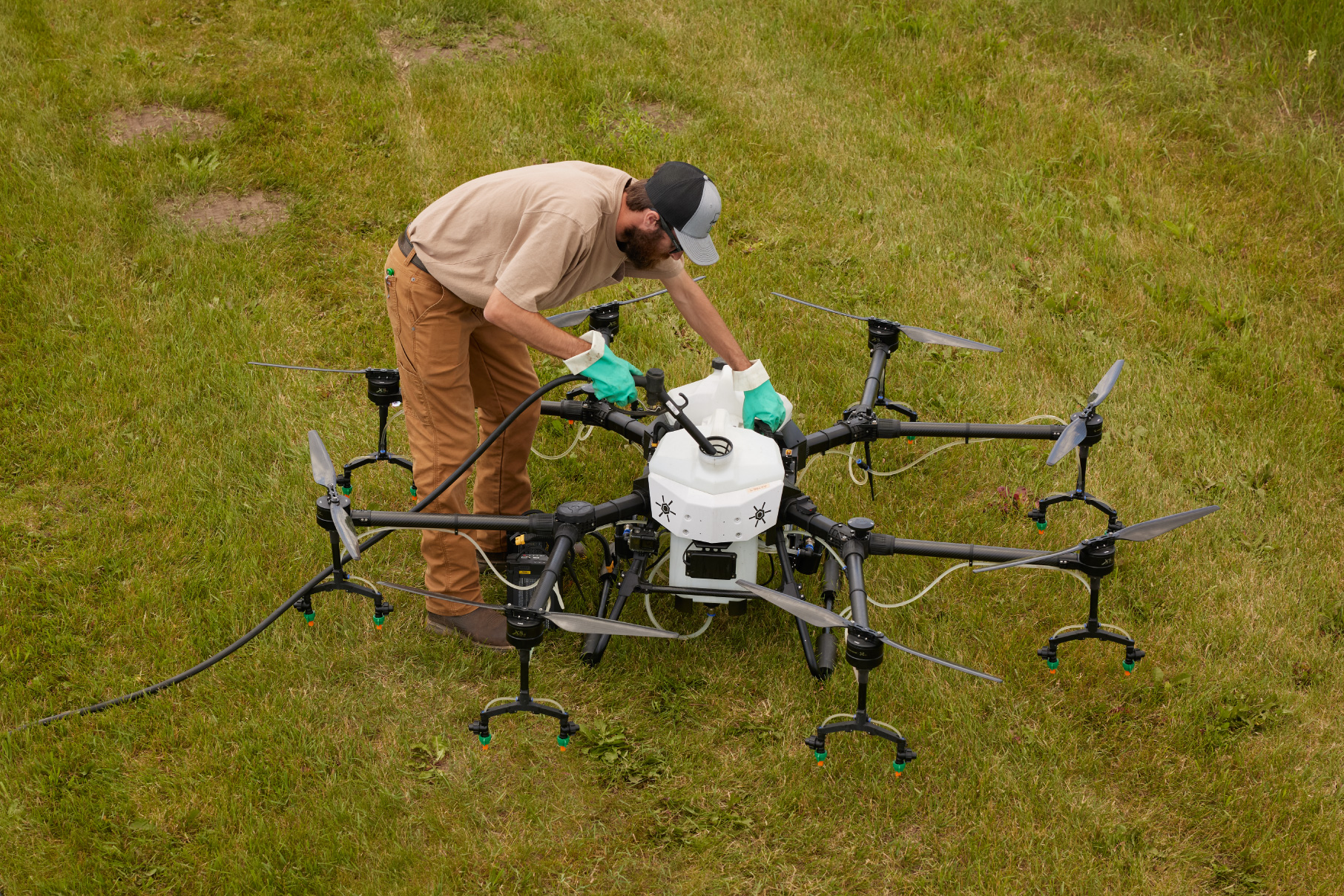
The final stop was led by Mason Slatke of Agri Spray Drones. This hands-on session highlighted features and differences among some of the newest spray drones on the market. It also showcased emerging drone accessories, including automatic filling stations, and reviewed important regulatory and compliance considerations for drone use.
Growers could get up close and personal with the latest drone sprayers.
Together, the sessions created a hands-on, well-rounded day of learning that generated positive feedback from participants. Mark Ledebuhr shared some final thoughts from the day, underscoring the importance of agronomic education as drone use expands.
“At the end of the day, it’s drone dealers’ jobs to sell drones,” Ledebuhr said. “But these machines can be difficult to learn how to pilot, which makes what WinField United is doing so important. It’s invested in helping growers maximize drone effectiveness with research at its Innovation Center, through its Answer Plot program and with its dedicated agronomy team.”
To learn more about many of the topics demonstrated at the workshop, download the resource guide Drone Applications Done Right or watch the videos below to get my top seven drone spraying tips.
All photos are either the property of WinField United or used with permission.


.jpg?width=870&height=580&ext=.jpg)




.jpg?ext=.jpg)