

3 Must-Knows for Drone Applications
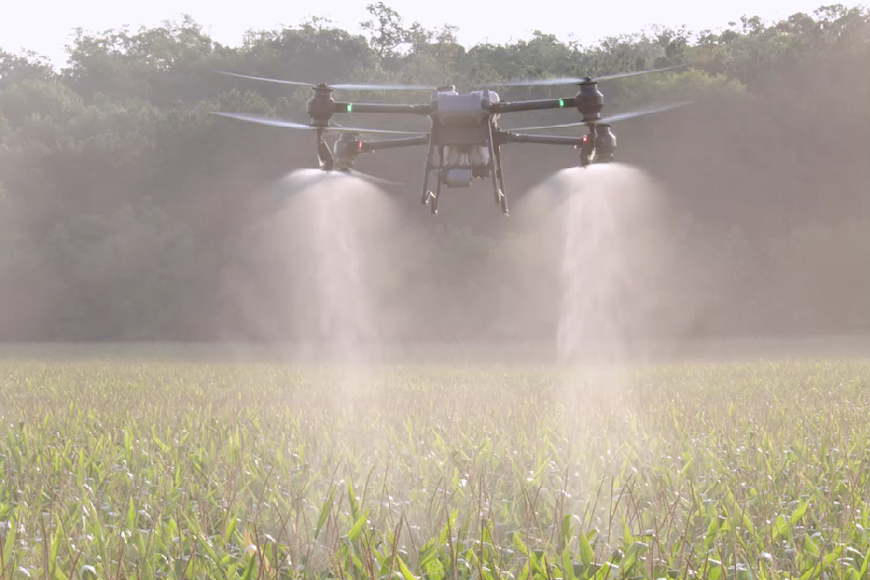
Every pesticide application worth making is worth doing correctly. Drones have proven to be a helpful innovation for efficient crop protection applications, but many precise factors need to be right in order to optimize performance. Whether you’re spraying your own crops, spraying your neighbor’s or hiring a drone operator, these are must-knows to unlock the potential of drones.
Learn which top 7 spray settings to pay attention to and how to adjust them for optimize performance.
Use these considerations to guide application decisions:
Small droplets:
For more information on drone applications or guidance on best practices, contact your local WinField® United retailer.
1Based on one trial at the Innovation Center in River Falls, WI in 2021. Trials: 1, Reps: 3; P-value: 0.0236.
211 Answer Plot locations. MAX-IN Ultra ZMB Plus (32 fl oz/A) applied to V4, V10 and VT corn. Additional factors were considered, including macronutrient (N, P, K) and micronutrient (Zn, Mn, B) status at V5. V10 results were the most statistically significant. NutriSolutions tissue analysis was completed V4-V7 to inform early nutrient status.
All photos are either the property of WinField United or used with permission.
© 2026 WinField United. Important: Before use always read and follow label instructions. Crop performance is dependent on several factors many of which are beyond the control of WinField United, including without limitation, soil type, pest pressures, agronomic practices and weather conditions. Growers are encouraged to consider data from multiple locations, over multiple years and to be mindful of how such agronomic conditions could impact results. Answer Plot, MasterLock, MAX-IN, WinField and ZMB are trademarks of WinField United. All other trademarks are the property of their respective owners.
Learn which top 7 spray settings to pay attention to and how to adjust them for optimize performance.
1. Dial in Droplet Size for Optimal Coverage
Most drones on the market today use rotary atomizers to create spray droplets. This allows drone operators to adjust rotary disk speeds on the fly to increase or decrease spray droplet size. Optimizing droplet size can greatly impact application quality and performance.Use these considerations to guide application decisions:
Small droplets:
- PRO: More coverage potential.
- CON: Can be easily blown off course, and small droplets can evaporate before they move to the intended target.
- PRO: Balance of adequate coverage while limiting off-target droplet movement and evaporation risk.
- CON: Face some drift risk when spraying herbicide products.
- PRO: Less prone to spray drift.
- CON: Limit plant coverage, and large droplets could potentially bounce off of the leaf surface.
2. Promote Consistent Spray Coverage
Water alone sprayed through a rotary atomizer produces a wide range of droplet sizes, which can lead to inconsistent and poor coverage along with high drift risk. But there are additional products that can be added to the tank mix to help achieve even, consistent spray with a drone:- Polymer-type drift control agents increase droplet size, which decreases drift potential. However, their large droplets can become too big, potentially decreasing overall coverage for fungicides.
- Spray droplet modifiers typically are the ideal option. They cut down on small, driftable spray droplets by producing consistently sized droplets, leading to optimal coverage and greater potential performance. We recommend MasterLock® adjuvant — when applied with fungicide via drone, MasterLock adjuvant delivers 6.2x more spray into the canopy.1
3. Add Yield-Enhancing Products to Your Plan
Most drone applicators strive to provide quality applications that provide growers strong ROI potential. But there’s another bonus you might not have considered: drone applications unlock the ability to make yield-enhancing applications that may not be practical with other application methods.- Mid-vegetative micronutrient applications in corn: Replicated Answer Plot® testing examined foliar micronutrient response based on application timing. The V10 timing provided the ideal response to MAX-IN® Ultra ZMB® Plus, a 3-in-1 micronutrient product, in corn.2
- Fungicide enhancement: Many emerging biological products can be sprayed in addition to fungicide at VT to increase yield potential. Yield-On®, a biostimulant from Syngenta, has shown consistent performance when applied at VT with fungicide applications.
Taking the Next Steps
When drone applications are done right, crop protection can be effective and efficient, with the opportunity for greater yield potential. To optimize drone performance, remember to:- Dial in droplet size.
- Use the right adjuvant to optimize spray coverage.
- Evaluate new yield-enhancing products that drone applications can unlock.
For more information on drone applications or guidance on best practices, contact your local WinField® United retailer.
1Based on one trial at the Innovation Center in River Falls, WI in 2021. Trials: 1, Reps: 3; P-value: 0.0236.
211 Answer Plot locations. MAX-IN Ultra ZMB Plus (32 fl oz/A) applied to V4, V10 and VT corn. Additional factors were considered, including macronutrient (N, P, K) and micronutrient (Zn, Mn, B) status at V5. V10 results were the most statistically significant. NutriSolutions tissue analysis was completed V4-V7 to inform early nutrient status.
All photos are either the property of WinField United or used with permission.
© 2026 WinField United. Important: Before use always read and follow label instructions. Crop performance is dependent on several factors many of which are beyond the control of WinField United, including without limitation, soil type, pest pressures, agronomic practices and weather conditions. Growers are encouraged to consider data from multiple locations, over multiple years and to be mindful of how such agronomic conditions could impact results. Answer Plot, MasterLock, MAX-IN, WinField and ZMB are trademarks of WinField United. All other trademarks are the property of their respective owners.

Related Articles