
Field Walk Checklist
Taking the time to walk your fields is one of the best investments you can make. The findings can reveal valuable insights that help guide decisions now and into the future. A field walk can help identify what’s working, where challenges exist and what adjustments may improve next season’s performance. Here’s what to look for and why it matters.
Next, take a look at overall plant color and vigor. Healthy plants should be green and show good leaf integrity at this stage. While you're in the field, pull a few plants and examine the root system. How deep and wide did the roots spread? Strong root development is a sign of a healthy growing environment and good nutrient uptake throughout the season.
Also, take note of ear height consistency across the field. Significant fluctuation in ear set often traces back to uneven emergence early in the season. Keep a note of this as it can be a useful data point when evaluating this year's hybrid performance, planter setup and stand establishment.
For soybean fields, pay special attention to any yellowing that could indicate iron deficiency chlorosis (IDC). If IDC is showing up in certain areas, it may be worth considering varieties with a stronger IDC score when making seed decisions for next year.
If you are seeing areas of heavy disease pressure on your acres or you would like to continue managing plant health, a fungicide application may be in order. Fungicide decisions are some of the most timing-sensitive calls you'll make during the season, and a late-season field walk is a great opportunity to evaluate whether your program delivered and whether a final application might still make sense.
When assessing fungicide need, look at the disease spectrum with which you are dealing (gray leaf spot, northern corn leaf blight, tar spot, white mold in soybeans, etc.), your hybrid's disease ratings and the environmental conditions you've seen this season. High humidity, extended periods of leaf wetness and dense canopies all increase disease pressure and the likelihood a fungicide application pays off. Additionally, consider the current condition of your crop; a large portion of the yield is made after tasseling, and it may be a benefit to keep proper plant health in check. Stay close with your retailer during this time to evaluate the need and apply as soon as possible if so.
If you're seeing signs of micronutrient deficiencies, consider incorporating a product like MAX-IN® Ultra ZMB® Plus micronutrient into your program. With a concentrated blend of zinc, manganese and boron, it provides additional plant health support and can be applied with your fungicide at critical late vegetative and early reproductive growth stages.
Most importanty, bring these observations into your planning discussions for next year. Hybrid performance, pest and disease pressure, weed escapes and nutrient issues are exactly the kind of real-world data that lead to better seed choices, stronger crop protection programs and more productive seasons ahead.
All photos are either the property of WinField United or used with permission.
© 2026 WinField United. Important: Before use always read and follow label instructions. Crop performance is dependent on several factors many of which are beyond the control of WinField United, including without limitation, soil type, pest pressures, agronomic practices and weather conditions. Growers are encouraged to consider data from multiple locations, over multiple years and to be mindful of how such agronomic conditions could impact results. WinField, XtendFlex, Enlist, MAX-IN and ZMB are trademarks of WinField United. All other trademarks are the property of their respective owners.
Plant Standability & Health
Start with the basics: are your plants standing? If you're seeing lodging, try to determine whether it's root lodging (plants tipping from the base) or goose-necking (plants bent mid-stalk). Both tell a story. Look for potential causes like disease, pest pressure, weather-related events or soil compaction while you're there and write them down.Next, take a look at overall plant color and vigor. Healthy plants should be green and show good leaf integrity at this stage. While you're in the field, pull a few plants and examine the root system. How deep and wide did the roots spread? Strong root development is a sign of a healthy growing environment and good nutrient uptake throughout the season.
Also, take note of ear height consistency across the field. Significant fluctuation in ear set often traces back to uneven emergence early in the season. Keep a note of this as it can be a useful data point when evaluating this year's hybrid performance, planter setup and stand establishment.
Disease Pressure
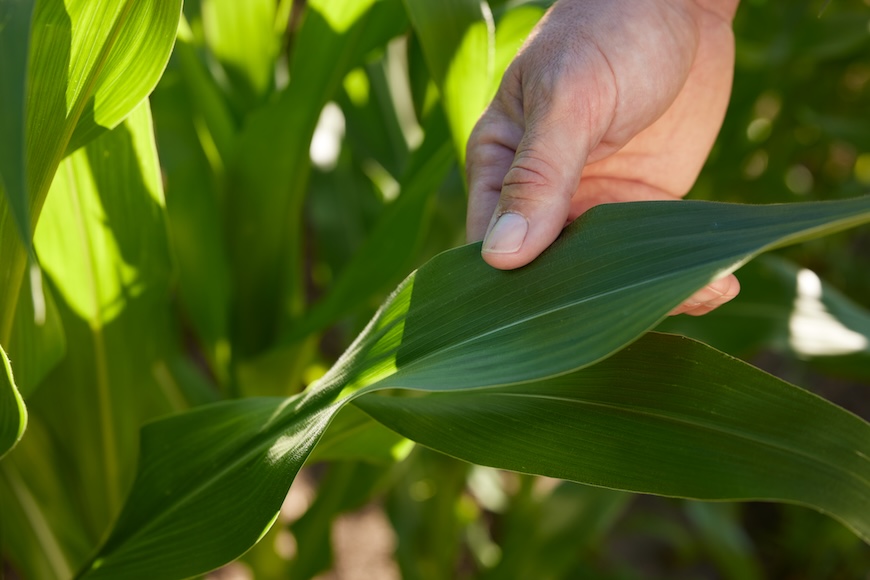
Give leaves a close look for any signs of disease. Compare what you're seeing against the hybrid's disease resistance ratings; did it hold up as expected? Identifying the disease spectrum present in your fields this year will help you determine whether your current hybrid lineup has the right resistance package going forward.For soybean fields, pay special attention to any yellowing that could indicate iron deficiency chlorosis (IDC). If IDC is showing up in certain areas, it may be worth considering varieties with a stronger IDC score when making seed decisions for next year.
If you are seeing areas of heavy disease pressure on your acres or you would like to continue managing plant health, a fungicide application may be in order. Fungicide decisions are some of the most timing-sensitive calls you'll make during the season, and a late-season field walk is a great opportunity to evaluate whether your program delivered and whether a final application might still make sense.
When assessing fungicide need, look at the disease spectrum with which you are dealing (gray leaf spot, northern corn leaf blight, tar spot, white mold in soybeans, etc.), your hybrid's disease ratings and the environmental conditions you've seen this season. High humidity, extended periods of leaf wetness and dense canopies all increase disease pressure and the likelihood a fungicide application pays off. Additionally, consider the current condition of your crop; a large portion of the yield is made after tasseling, and it may be a benefit to keep proper plant health in check. Stay close with your retailer during this time to evaluate the need and apply as soon as possible if so.
Insect Pressure
In corn fields, pay special attention to the silks as they may be harboring corn rootworm beetles. If you find significant damage (silk clipping), consider making an insecticide application to protect the plant during pollination if it has done so already. Otherwise, dig the roots, look for any damage that may have occurred during root feeding and use this to make a decision for hybrid trait selection. You also may want to check stalks, ears, cobs and kernels for signs of European corn borer damage. If you farm in a western corn-growing region, also scout for Western bean cutworm activity. When it comes to Western bean cutworm, trait-based resistance currently is one of the most effective tools available and something worth noting in your hybrid selection conversations this fall.Herbicide Performance
Now is a good time to assess how your herbicide program performed this season. Walk the field with an eye on weed pressure: what escaped, where and why? This is especially important if you used the XtendFlex® or Enlist E3® soybean systems. Understanding how those programs worked within your operation can help you identify whether any adjustments make sense for next year. Consider the application timing windows of your applications and determine whether the trait system you're using is well matched to your weed management goals and operational workflow.Nutrient Deficiencies
Take a close look at leaves three, four and five from the base of your corn plants. These leaves can reveal visual symptoms of nutrient deficiencies that may have limited yield potential this season. Nitrogen is a common culprit, but other deficiencies like potassium can show up here, too.If you're seeing signs of micronutrient deficiencies, consider incorporating a product like MAX-IN® Ultra ZMB® Plus micronutrient into your program. With a concentrated blend of zinc, manganese and boron, it provides additional plant health support and can be applied with your fungicide at critical late vegetative and early reproductive growth stages.
Setting Up a Strong Harvest
After walking your fields, jot down your findings and use them to have proactive conversations with your agronomist or seed advisor. If standability or disease is a concern, developing a strategic harvest order can help minimize losses. Sometimes, it's best to harvest the most at-risk fields first before conditions deteriorate.Most importanty, bring these observations into your planning discussions for next year. Hybrid performance, pest and disease pressure, weed escapes and nutrient issues are exactly the kind of real-world data that lead to better seed choices, stronger crop protection programs and more productive seasons ahead.
All photos are either the property of WinField United or used with permission.
© 2026 WinField United. Important: Before use always read and follow label instructions. Crop performance is dependent on several factors many of which are beyond the control of WinField United, including without limitation, soil type, pest pressures, agronomic practices and weather conditions. Growers are encouraged to consider data from multiple locations, over multiple years and to be mindful of how such agronomic conditions could impact results. WinField, XtendFlex, Enlist, MAX-IN and ZMB are trademarks of WinField United. All other trademarks are the property of their respective owners.

Related Articles