

Take Care of Early Spring Weeds Before Planting
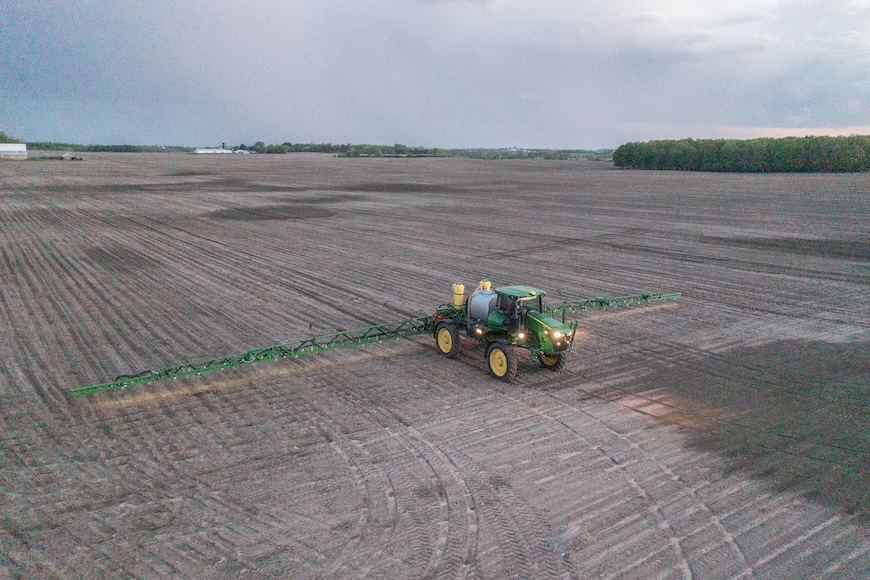
If you deal with winter or spring annual weeds in your fields, it's important to consider including a spring burndown herbicide application. Winter annuals, including marestail, chickweed, henbit, pennycress and shepherd’s purse, resume growing as soon as temperatures get warm. Not only do these weeds steal the valuable water and nutrients in the soil, but they also can create planting challenges.
That’s why it’s essential to address these troublesome weeds to eliminate their competitive advantages over the crops you intend to plant. As you prepare for spring, follow these four tips to establish clean fields and give your crop a strong start.
1. Scout Fields to Identify Weeds
Identifying early season weeds correctly can help you plan the most effective spring burndown application. Marestail in particular has shown resistance to glyphosate and ALS-inhibitor herbicides.Using alternative herbicide active ingredients like those in Dimetric® Liquid herbicide or Dimetric Charged herbicide can increase the consistency of control for marestail and other winter annual weeds. Both of these herbicides offer residual benefits that can help extend weed control to keep fields clean during critical stand establishment. 2,4-D and dicamba also are effective for spring burndown applications. With new and continuously evolving dicamba restrictions, be sure to read product labels and follow the outlined planting restrictions.
2. Make Timely Spring Burndown Applications
Winter annual weeds start growing as soon as temperatures warm. This means by the time you are ready to plant, those weeds may have already entered reproductive stages, making them more challenging to control. Managing weeds when they're still small will help increase the efficacy of your herbicide application.3. Follow Herbicide Label Instructions
It won't pay to cut corners with your spring burndown applications. Consult the herbicide’s label to ensure you use the correct carrier type, volume, nozzles and partner products based on your field’s weed pressure and environmental conditions.Also, keep in mind weed control is most effective when weeds are actively growing and metabolizing herbicide active ingredients. Sunny, warm days with temperatures of 60 degrees or above and nighttime temperatures above 40 degrees typically lead to more successful applications.
4. Optimize Herbicide ROI Potential
Every year, we face increasing weed resistance and higher input prices, making it even more critical to get effective weed control on the first pass. Adding the right tank-mix partners, including effective adjuvants, can help improve herbicide coverage and weed control. But don’t trust your crop protection investments to just any adjuvant. Ask for data and research to back up product claims and ensure products will perform in your fields.
Even small weeds can rob emerging crops of valuable moisture and nutrients, limiting yield and ROI potential. Adding an effective product like SuperLock™, StrikeLock®, InterLock® or Class Act® NG® adjuvants is an economical way to enhance herbicide performance and ensure you’re getting the most out of the dollars you’ve spent.
StrikeLock and InterLock adjuvants are excellent at reducing drift and improving deposition. The more droplets you can get to the plant, the better performance you’ll get from your herbicide. StrikeLock adjuvant is a methylated seed oil designed specifically for oil-loving herbicides while InterLock adjuvant is an all-purpose drift and deposition aid. Class Act NG adjuvant is a top-shelf, AMS-based water conditioner that also includes nonionic surfactant and CornSorb® technology for maximum weed control.
SuperLock™ adjuvant is a newer addition to the WinField® United “Lock” portfolio. It’s a unique combination product, containing all the drift reduction power of the Lock products you know with a high surfactant crop oil concentrate. SuperLock™ adjuvant is easy to use, broadly compatible across crops and tank mixes, and improves the ROI potential of your herbicide application with greater efficacy and a lower use rate.
For more information about spring burndown applications, contact your local WinField United retailer.
All photos are either the property of WinField United or used with permission.
© 2026 WinField United. Important: Before use always read and follow label instructions.Crop performance is dependent on several factors many of which are beyond the control of WinField United, including without limitation, soil type, pest pressures, agronomic practices and weather conditions. Growers are encouraged to consider data from multiple locations, over multiple years and to be mindful of how such agronomic conditions could impact results. Class Act, CornSorb, Dimetric, InterLock, NG, StrikeLock, SuperLock and WinField are trademarks of WinField United. All other trademarks are the property of their respective owners

Related Articles

.jpeg?ext=.jpeg)