

How to Choose the Right Oil-Based Adjuvant for Spring Weed Control
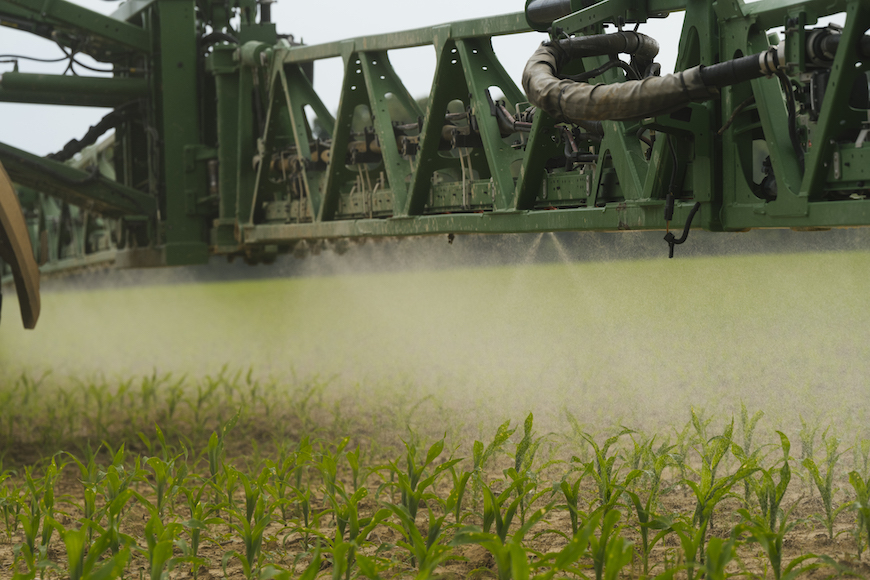
Start clean, stay clean. That’s the word when it comes to weed control. Sounds simple in theory, but making it happen...now that’s a different story.
As valuable as spring burndowns are, unfortunately, a burndown application alone doesn’t cut it. Between weeds’ tolerances to herbicides, trait-specific herbicide needs, changing environmental regulations, complicated chemistries and more, controlling weeds takes a complex tank mix and careful planning. With all those moving parts, it’s easy to leave adjuvants out. I’m here to remind you not to overlook the importance of oil adjuvants, a critical ingredient in intense tank mixes.
Look at it like this: In a hostile environment of weeds, you need to level the playing field to give your herbicide a better shot of getting the job done. An adjuvant is just that — it levels the playing field, giving you an advantage over weeds. That way when you spray, it is more likely to be a one-time, effective application. I’m not here to say finding the right herbicide isn’t important, rather to show you that pairing it with the right adjuvant complements is just as crucial.
The CPDA (Council of Producers and Distributors of Agrotechnology) has published research to show just how critical including the right tank-mix adjuvant is in achieving optimal weed control. By excluding an adjuvant (when the label calls for one), you could see a 30-90% reduction in herbicide performance.1 Even including an adjuvant if it’s the wrong type can hurt, so much so that growers could face an up to 50% performance reduction, plus the added risk of crop injury.11
The way I illustrate the in-field difference is by visualizing a leaf. Imagine the leaf is smashed between two bricks — they would scrape the surface of the leaf, but not much. That’s a COC. Now, imagine the surface of the same leaf is scratched by two sharp knife blades. The knife would strip the surface of the leaf more than the bricks; that’s an MSO. Simply put, MSOs can have more potential phyto than COCs, but in an intense environment may be needed to effectively control weeds.
So, is one better than the other? Like many agronomic answers, it depends. To choose the best one for your field’s needs, I recommend starting with the herbicide label. Does it call for an MSO or COC? Sometimes, the label specifies; but other times, it lists both as viable options. In that case, my next step would be considering the climate. If you’re in a dry climate, a kind of MSO may be best, as plants in these environments develop thicker cuticles and thus require an MSO to penetrate the leaf’s membrane.
Other things to keep in mind are the severity of the weeds and the risk of burn. Are weeds large? Are they hardened off? If the answers to those are yes and you’re fighting tougher, larger weeds, an MSO might be called for. If weeds are in their initial growth stages, you might be able to use a COC with less chance of phyto
Take a step back and look at the big picture of weed control. Every droplet coming out of the sprayer is just as important in the process of killing weeds as the sprayer, the driver, the nozzles, etc. We all recognize if those don’t work to their fullest potential, we’re throwing away dollars, time and yields. The same principle applies for your chemistry. For every tiny droplet that drifted away or didn’t absorb into the weed, that’s another negative towards ROI. And if you don’t get weed control right the first time, the cost of spraying two or three more times is much higher than the initial investment of a good adjuvant.
One recommendation I would make for an oil adjuvant to help stretch herbicide performance and dollars, I would suggest SuperLock™ adjuvant. A unique combination of a HSCOC and drift and deposition aid, SuperLock™ adjuvant is one of the first in the industry to add drift reduction technology to a crop oil. This convenient 2-in-1 product is a simple way to maximize your herbicide ROI potential with minimal effort, plus it’s flexible across crops and tank mix partners like glufosinate, 2,4-D, clethodim and mesotrione.
As you plan for 2026, I urge you to reevaluate your weed control goals and review previous results. If you’re thinking about what is cheapest instead of what will improve ROI, you might only be hurting yourself. Talk to your local WinField® United retailer to choose the best oil adjuvant for your crops.
1Council of Producers and Distributors of Agrotechnology, 2022. https://cpda.com/wp-content/uploads/2022/07/CPDA-Adjuvant-Cert-Program-Flyer-2022.pdf.
All photos are either the property of WinField United or used with permission.
© 2026 WinField United. Important: Before use always read and follow label instructions. Crop performance is dependent on several factors many of which are beyond the control of WinField United, including without limitation, soil type, pest pressures, agronomic practices and weather conditions. Growers are encouraged to consider data from multiple locations, over multiple years and to be mindful of how such agronomic conditions could impact results. SuperLock and WinField are trademarks of WinField United. All other trademarks are the property of their respective owners.
As valuable as spring burndowns are, unfortunately, a burndown application alone doesn’t cut it. Between weeds’ tolerances to herbicides, trait-specific herbicide needs, changing environmental regulations, complicated chemistries and more, controlling weeds takes a complex tank mix and careful planning. With all those moving parts, it’s easy to leave adjuvants out. I’m here to remind you not to overlook the importance of oil adjuvants, a critical ingredient in intense tank mixes.
The Right Time for an Adjuvant is All the Time
You might be wondering if adjuvants are really necessary in your herbicide application, especially given the high input costs we’re facing. The answer is yes, without a doubt. In general, an adjuvant should be included in every tank mix to help get your chemistries to the target. The right one can help you ensure your herbicide is working hard towards your goals of zero weeds and maximum return potential.Look at it like this: In a hostile environment of weeds, you need to level the playing field to give your herbicide a better shot of getting the job done. An adjuvant is just that — it levels the playing field, giving you an advantage over weeds. That way when you spray, it is more likely to be a one-time, effective application. I’m not here to say finding the right herbicide isn’t important, rather to show you that pairing it with the right adjuvant complements is just as crucial.
The CPDA (Council of Producers and Distributors of Agrotechnology) has published research to show just how critical including the right tank-mix adjuvant is in achieving optimal weed control. By excluding an adjuvant (when the label calls for one), you could see a 30-90% reduction in herbicide performance.1 Even including an adjuvant if it’s the wrong type can hurt, so much so that growers could face an up to 50% performance reduction, plus the added risk of crop injury.11
When to Use Oil Adjuvants
Many common herbicides need an oil adjuvant to emulsify the tank mix and unlock their full potentials. Beyond emulsifying, oil adjuvants play a key role in herbicide uptake. When pesticides are sprayed, the droplets sit on the waxy surface of the leaf before penetrating the cuticle and killing the weed. During this time, the sun can degrade the droplets. Oil adjuvants help prevent degradation by dissolving this waxy cuticle, allowing the plant to absorb the herbicide quicker and more effectively.Choosing an Oil Adjuvant
You might already know there are two broad classes of oil adjuvants: methylated seed oils (MSOs) and crop oil concentrates (COCs). This includes those with a high surfactant component (HSMSOs and HSCOCs), whose makeups must consist of at least 25% high surfactant. The primary difference in chemistries is MSOs are made from modified seed oils while COCs come from refined petroleum oil.The way I illustrate the in-field difference is by visualizing a leaf. Imagine the leaf is smashed between two bricks — they would scrape the surface of the leaf, but not much. That’s a COC. Now, imagine the surface of the same leaf is scratched by two sharp knife blades. The knife would strip the surface of the leaf more than the bricks; that’s an MSO. Simply put, MSOs can have more potential phyto than COCs, but in an intense environment may be needed to effectively control weeds.
So, is one better than the other? Like many agronomic answers, it depends. To choose the best one for your field’s needs, I recommend starting with the herbicide label. Does it call for an MSO or COC? Sometimes, the label specifies; but other times, it lists both as viable options. In that case, my next step would be considering the climate. If you’re in a dry climate, a kind of MSO may be best, as plants in these environments develop thicker cuticles and thus require an MSO to penetrate the leaf’s membrane.
Other things to keep in mind are the severity of the weeds and the risk of burn. Are weeds large? Are they hardened off? If the answers to those are yes and you’re fighting tougher, larger weeds, an MSO might be called for. If weeds are in their initial growth stages, you might be able to use a COC with less chance of phyto
How Oil Adjuvants Boost ROI Potential
For growers who aren’t using adjuvants in their tank mixes, I’d venture to say the major objection is probably cost. The combination of high input costs and relatively low commodity prices isn’t ideal. If that’s you, I’d encourage you to stop looking at expenses alone and refocus your attention on ROI. Adding an effective adjuvant is one small element you can control that makes a major difference in driving strong ROI and performance.Take a step back and look at the big picture of weed control. Every droplet coming out of the sprayer is just as important in the process of killing weeds as the sprayer, the driver, the nozzles, etc. We all recognize if those don’t work to their fullest potential, we’re throwing away dollars, time and yields. The same principle applies for your chemistry. For every tiny droplet that drifted away or didn’t absorb into the weed, that’s another negative towards ROI. And if you don’t get weed control right the first time, the cost of spraying two or three more times is much higher than the initial investment of a good adjuvant.
One recommendation I would make for an oil adjuvant to help stretch herbicide performance and dollars, I would suggest SuperLock™ adjuvant. A unique combination of a HSCOC and drift and deposition aid, SuperLock™ adjuvant is one of the first in the industry to add drift reduction technology to a crop oil. This convenient 2-in-1 product is a simple way to maximize your herbicide ROI potential with minimal effort, plus it’s flexible across crops and tank mix partners like glufosinate, 2,4-D, clethodim and mesotrione.
As you plan for 2026, I urge you to reevaluate your weed control goals and review previous results. If you’re thinking about what is cheapest instead of what will improve ROI, you might only be hurting yourself. Talk to your local WinField® United retailer to choose the best oil adjuvant for your crops.
1Council of Producers and Distributors of Agrotechnology, 2022. https://cpda.com/wp-content/uploads/2022/07/CPDA-Adjuvant-Cert-Program-Flyer-2022.pdf.
All photos are either the property of WinField United or used with permission.
© 2026 WinField United. Important: Before use always read and follow label instructions. Crop performance is dependent on several factors many of which are beyond the control of WinField United, including without limitation, soil type, pest pressures, agronomic practices and weather conditions. Growers are encouraged to consider data from multiple locations, over multiple years and to be mindful of how such agronomic conditions could impact results. SuperLock and WinField are trademarks of WinField United. All other trademarks are the property of their respective owners.

Related Articles

.jpg?ext=.jpg)