
In the Field: Local Insights From Our Answer Plot® Live Events
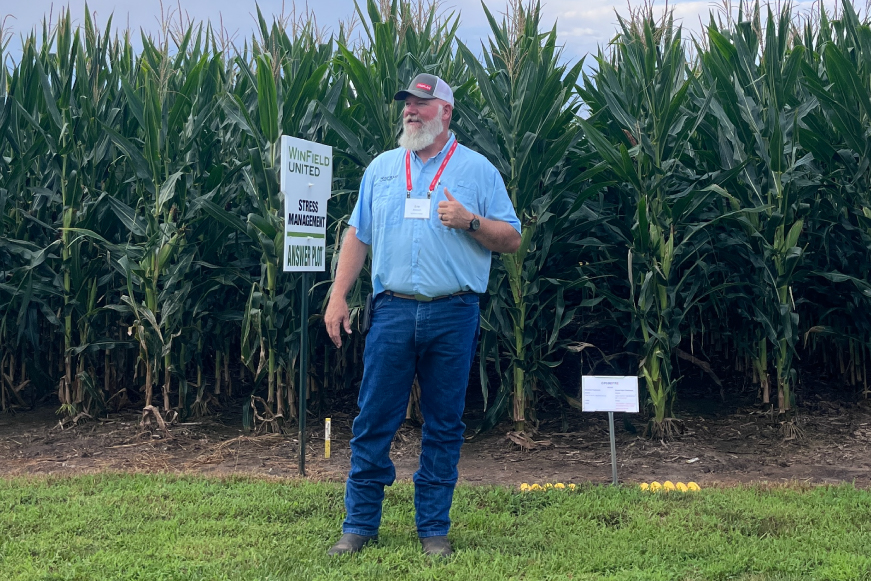
For more than 25 years, Answer Plot locations have given you access to the information you need to feel confident in your agronomic decisions. Through trials and on-farm assessments, we’ve collected more than 6 million data points on product performance, yield environments and management practices to help growers like you choose the right inputs and practices for your fields.
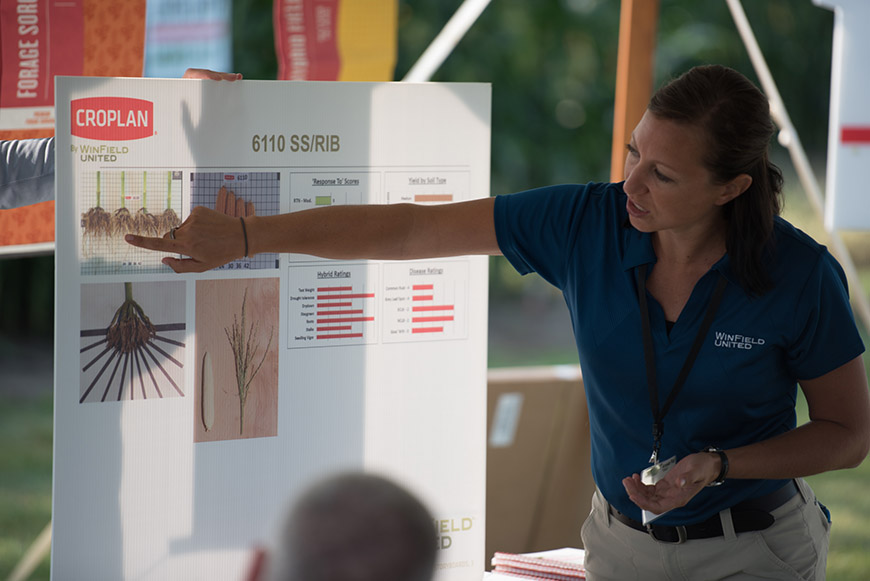
This summer, we shared some of that data at Answer Plot Live events at six locations across the country, giving your retailers a showcase of the latest innovations and test results right from local fields.
Here’s a snapshot of the events — and the insights you can take back to your farm.
Session leaders at the Answer Plot in Jackson, Tennessee, highlighted ways to adapt cotton and soybean management strategies throughout the growing season to protect yield potential.
Key takeaways:
- Management decisions should adapt to real-time field conditions rather than relying on one fixed approach for the whole season.
- Stay diligent with scouting and, when challenges pop up, lean on your local retailer to help you manage them quickly and effectively.
- Successful soybean management requires combining agronomics with economics.
This summer’s Answer Plot event showcased the latest trait and genetic developments for field peas, sunflowers and triticale, and how they performed in the field. Insights like these help your retailer make more personalized recommendations — and help you make more informed seed decisions.
Key takeaways:
- Field peas: A new research program is testing varieties with increases in protein. The team is also seeing that Ascend® ST3™ PGR can help provide a meaningful yield benefit in yellow field peas.
- Sunflowers: The Innovation Farm team is doing in-furrow trials of sunflower hybrids and testing Spryzo™ SF, a new sunflower seed treatment that helps boost emergence and protect against pests. “To help get the sunflower stand established, we have launched a new product, Spryzo™ SF as a new standard seed treatment for all CROPLAN® sunflower seed. It has seven ingredients, and it’s got a nice product portfolio against diseases and insects, especially cutworms,” says Ryan Moeller, WinField® United product manager.
- Triticale: The Innovation Farm team is also testing new triticale varieties exclusive to CROPLAN seed, designed to help with dryness.
Key takeaways:
- We know drought is a strong possibility each year, which means you can be proactive in your management strategies. Getting the right nitrogen strategy is critical, since it is a core component of managing drought stress while helping maximize corn yield potential.
- With input costs rising, especially for fertilizer, the efficiency of nitrogen application is especially important. Potassium can help by optimizing the impact of nitrogen, allowing it to better do its job in the right time frames.
- For example: CROPLAN CP5115VT2P has a high response-to-nitrogen (RTN) score, meaning applying nitrogen is effective in helping it reach its genetic potential. Applying a micronutrient like MAX-IN® K at the right time can help make nitrogen more efficient (as demonstrated in a recent Answer Plot trial in Lawrence).
Economics is an undeniably big consideration in your management decisions, especially when it comes to ROI for adjuvants and herbicide applications. And today, there are more adjuvant options on the market than ever, making product selection a complicated decision. Presenters at the Hazen, Arkansas, Answer Plot location explored this dilemma in their adjuvant-focused session.
Key takeaways:
- Adjuvant choices should be based on herbicide, target pest, nozzle and application conditions; adding the right adjuvants to your management plan can help maximize ROI potential.
- For example: At the event, presenters highlighted the new OPTIFY® ACT D-Foam adjuvant. OPTIFY ACT D-Foam features an activator, defoamer and dual-action surfactant system and is designed to help support cleaner applications. The result: You’re using every last drop, which is especially valuable when ROI is top of mind and margins are tight.
See more: Watch How OPTIFY ACT D-Foam Takes Down Foam Fast
In Nebraska, drought pressure and southern rust were big concerns this year — and tar spot came into the picture late in the season. The Seward, Nebraska, Answer Plot Live event offered helpful insights to prevent and manage these common challenges.
Key takeaways:
- Selecting the right hybrids helps with drought management. CROPLAN 5249 PCE has shown good disease tolerance, good late-season plant health and strong yield results. The team has also been testing SmartStax, Trecepta, Vorceed Enlist and VT4PRO corn traits in local conditions.
- To understand your field’s risk for tar spot, use the rules of seven: 7 hours of wetness a day, 70 degrees Fahrenheit (average daily temperature) and 70% humidity (or higher) within the crop canopy. These are the ideal conditions for tar spot to form.
- Coverage is crucial for fungicide performance. For soybeans, MasterLock® adjuvant helps spread droplets evenly across the leaf surface to support better coverage and disease management — see how.

Key takeaways:
- Timing is key for soybean planting and getting nutrition right. Growers can get a bigger taproot when planting early — and the straighter the taproot, the more benefits for late-season uptake. Soybean plants use 70% of their nutrients after R1, and R5 is peak uptake time. It’s important to apply cytokinins early to encourage more above-ground growth; as for boron, more than one application is often required, as soybeans consume it in large amounts.
- In addition to highlighting plant nutrition strategies, presenters showcased CROPLAN and Bayer's new soybean trait platform, Vyconic, which is designed with herbicide flexibility in mind. It’s tolerant to multiple herbicides, including mesotrione (Group 27), ideal for pre- and post-emergence control options.

Want more expert agronomic insights? Talk to your local WinField United retailer about their recommendations for your plot.
All photos are either the property of WinField United or used with permission.
© 2026 WinField United. Important: Before use, always read and follow label instructions. Crop performance is dependent on several factors many of which are beyond the control of WinField United, including without limitation, soil type, pest pressures, agronomic practices and weather conditions. Growers are encouraged to consider data from multiple locations, over multiple years and to be mindful of how such agronomic conditions could impact results. Answer Plot, WinField, Ascend, ST3, Spryzo, CROPLAN, MAX-IN, OPTIFY and MasterLock are trademarks of WinField United. All other trademarks are the property of their respective owners.
This summer, we shared some of that data at Answer Plot Live events at six locations across the country, giving your retailers a showcase of the latest innovations and test results right from local fields.
Here’s a snapshot of the events — and the insights you can take back to your farm.
Jackson, Tennessee: Managing Weed and Pest Pressure
In the south, warm and dry conditions early in the season meant increased weed and pest pressure later on. In particular, frogeye leaf spot was a significant disease concern, and sudden death syndrome (SDS) was noted as an issue in Kentucky and Tennessee. When disease pressure is high, a strong management strategy is more important than ever.Session leaders at the Answer Plot in Jackson, Tennessee, highlighted ways to adapt cotton and soybean management strategies throughout the growing season to protect yield potential.
Key takeaways:
- Management decisions should adapt to real-time field conditions rather than relying on one fixed approach for the whole season.
- Stay diligent with scouting and, when challenges pop up, lean on your local retailer to help you manage them quickly and effectively.
- Successful soybean management requires combining agronomics with economics.
Washburn, North Dakota: Testing New Genetics and Traits
The Answer Plot Innovation Farm has been around since 2022, serving as a hub for diversified field crop (DFC) research with a special emphasis on sunflowers, canola and wheat. It’s also a testing ground for top genetic suppliers, allowing us to bring new traits and genetics into the U.S. and assess their performance.This summer’s Answer Plot event showcased the latest trait and genetic developments for field peas, sunflowers and triticale, and how they performed in the field. Insights like these help your retailer make more personalized recommendations — and help you make more informed seed decisions.
Key takeaways:
- Field peas: A new research program is testing varieties with increases in protein. The team is also seeing that Ascend® ST3™ PGR can help provide a meaningful yield benefit in yellow field peas.
- Sunflowers: The Innovation Farm team is doing in-furrow trials of sunflower hybrids and testing Spryzo™ SF, a new sunflower seed treatment that helps boost emergence and protect against pests. “To help get the sunflower stand established, we have launched a new product, Spryzo™ SF as a new standard seed treatment for all CROPLAN® sunflower seed. It has seven ingredients, and it’s got a nice product portfolio against diseases and insects, especially cutworms,” says Ryan Moeller, WinField® United product manager.
- Triticale: The Innovation Farm team is also testing new triticale varieties exclusive to CROPLAN seed, designed to help with dryness.
Lawrence, Kansas: Proactive Management Practices
While timing and severity vary by location, drought is essentially a given each year in Kansas. It may be tempting to pull money out when crops are struggling from drought, but that’s not always the most effective option; you can still recover some of that yield loss with proactive management. That’s what session leaders discussed at the Lawrence Answer Plot event.Key takeaways:
- We know drought is a strong possibility each year, which means you can be proactive in your management strategies. Getting the right nitrogen strategy is critical, since it is a core component of managing drought stress while helping maximize corn yield potential.
- With input costs rising, especially for fertilizer, the efficiency of nitrogen application is especially important. Potassium can help by optimizing the impact of nitrogen, allowing it to better do its job in the right time frames.
- For example: CROPLAN CP5115VT2P has a high response-to-nitrogen (RTN) score, meaning applying nitrogen is effective in helping it reach its genetic potential. Applying a micronutrient like MAX-IN® K at the right time can help make nitrogen more efficient (as demonstrated in a recent Answer Plot trial in Lawrence).
Hazen, Arkansas: Getting the Most Out of Crop Protection Dollars
Economics is an undeniably big consideration in your management decisions, especially when it comes to ROI for adjuvants and herbicide applications. And today, there are more adjuvant options on the market than ever, making product selection a complicated decision. Presenters at the Hazen, Arkansas, Answer Plot location explored this dilemma in their adjuvant-focused session. Key takeaways:
- Adjuvant choices should be based on herbicide, target pest, nozzle and application conditions; adding the right adjuvants to your management plan can help maximize ROI potential.
- For example: At the event, presenters highlighted the new OPTIFY® ACT D-Foam adjuvant. OPTIFY ACT D-Foam features an activator, defoamer and dual-action surfactant system and is designed to help support cleaner applications. The result: You’re using every last drop, which is especially valuable when ROI is top of mind and margins are tight.
See more: Watch How OPTIFY ACT D-Foam Takes Down Foam Fast
Seward, Nebraska: Smart Hybrid and Adjuvant Selection
In Nebraska, drought pressure and southern rust were big concerns this year — and tar spot came into the picture late in the season. The Seward, Nebraska, Answer Plot Live event offered helpful insights to prevent and manage these common challenges. Key takeaways:
- Selecting the right hybrids helps with drought management. CROPLAN 5249 PCE has shown good disease tolerance, good late-season plant health and strong yield results. The team has also been testing SmartStax, Trecepta, Vorceed Enlist and VT4PRO corn traits in local conditions.
- To understand your field’s risk for tar spot, use the rules of seven: 7 hours of wetness a day, 70 degrees Fahrenheit (average daily temperature) and 70% humidity (or higher) within the crop canopy. These are the ideal conditions for tar spot to form.
- Coverage is crucial for fungicide performance. For soybeans, MasterLock® adjuvant helps spread droplets evenly across the leaf surface to support better coverage and disease management — see how.
Story City, Iowa: Enhancing Yield Potential With New Seed Traits
In central Iowa, trying new things is important to continue pushing yield potential season after season. At the Story City, Iowa, Answer Plot Live event, session leaders focused on yield-enhancing products and practices, including new soybean hybrids and nutrient management strategies to help boost yield potential.Key takeaways:
- Timing is key for soybean planting and getting nutrition right. Growers can get a bigger taproot when planting early — and the straighter the taproot, the more benefits for late-season uptake. Soybean plants use 70% of their nutrients after R1, and R5 is peak uptake time. It’s important to apply cytokinins early to encourage more above-ground growth; as for boron, more than one application is often required, as soybeans consume it in large amounts.
- In addition to highlighting plant nutrition strategies, presenters showcased CROPLAN and Bayer's new soybean trait platform, Vyconic, which is designed with herbicide flexibility in mind. It’s tolerant to multiple herbicides, including mesotrione (Group 27), ideal for pre- and post-emergence control options.
Want more expert agronomic insights? Talk to your local WinField United retailer about their recommendations for your plot.
All photos are either the property of WinField United or used with permission.
© 2026 WinField United. Important: Before use, always read and follow label instructions. Crop performance is dependent on several factors many of which are beyond the control of WinField United, including without limitation, soil type, pest pressures, agronomic practices and weather conditions. Growers are encouraged to consider data from multiple locations, over multiple years and to be mindful of how such agronomic conditions could impact results. Answer Plot, WinField, Ascend, ST3, Spryzo, CROPLAN, MAX-IN, OPTIFY and MasterLock are trademarks of WinField United. All other trademarks are the property of their respective owners.

Related Articles